Nocturn: The Typeface That Haunts Your Design Projects
There's a moment in every horror film where the typography on screen does as much work as the score. The jagged title card for a slasher flick, the dripping letters on a Halloween event poster, the occult-inspired logo for a metal band's merchandise—these aren't accidents. They're deliberate choices made by designers who understand that letterforms carry emotional weight. If you've ever struggled to find a typeface that genuinely communicates dread, menace, and cinematic tension without looking like a cartoonish Halloween prop, you know the frustration. Most so-called "scary" fonts lean too far into novelty territory, sacrificing versatility for shock value. What you need is something built from the ground up to feel carved, raw, and authentically dark.
Understanding the Anatomy of a Horror Display Typeface
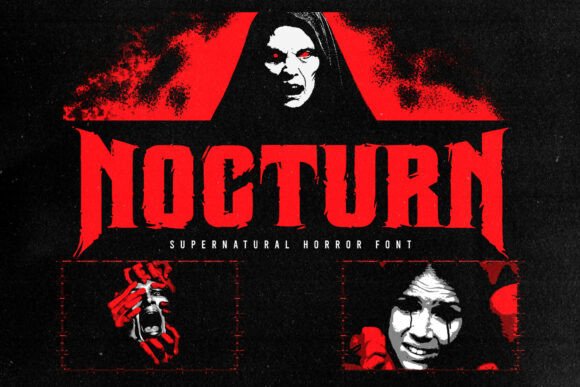
Nocturn isn't just another decorative font with sharp edges. It's a premium display typeface designed with specific atmospheric goals in mind. Every letterform features aggressive cuts, distressed textures, and gothic structural elements that feel intentionally brutal rather than accidentally messy. Think about the difference between a cheap rubber Halloween mask and the prosthetic work in a film like The Witch or Hereditary—one reads as costume, the other as genuine unease. That distinction matters in design work, and it's exactly where this typeface excels.
The uppercase characters dominate headlines with a bold, commanding presence that demands attention on movie posters, album covers, and event graphics. But unlike many display fonts that fall apart outside of their headline context, Nocturn includes a full lowercase set, numbers, punctuation, and stylistic alternates. This means you can actually build layered typography compositions without running into missing characters or awkward workarounds. For anyone working on complex editorial layouts, packaging design, or multi-page digital products, that flexibility is genuinely practical rather than just a bullet point on a features list.
Where This Typeface Actually Works in Real Projects
Let's move past the obvious. Yes, Nocturn works brilliantly for horror movie posters and Halloween campaigns. But the real value of a dark, atmospheric display font shows up in less expected places. Consider a true crime podcast that needs brand consistency across episode thumbnails, social media graphics, and merchandise. Or a specialty coffee roaster with a "dark roast" line that wants packaging to communicate intensity without relying on the same tired craft coffee aesthetic everyone else uses. A haunted attraction company redesigning their seasonal marketing materials. An independent game studio creating title screens and promotional assets for a psychological thriller. A metal band's web designer building out a tour page that needs to feel cohesive with album artwork.
These are real commercial applications where typeface choice directly impacts audience perception. When someone scrolls past a social media graphic and sees letterforms that look genuinely menacing—sharp, distressed, and structurally aggressive—they stop. That pause is valuable. It's the difference between engagement and invisibility in crowded digital spaces.
Pairing Dark Display Fonts with Everyday Typography
One of the most common mistakes designers make with bold display typefaces is using them everywhere. Nocturn is built for headlines, titles, and focal text elements—not body copy. The sharp, distressed details that make it powerful at large sizes become illegible noise at small sizes. This is true of virtually every creative font in the horror and gothic category, and recognizing that limitation is actually what separates professional typography from amateur experiments.
The practical approach is pairing Nocturn with a clean sans serif font for supporting text. Something geometric or neo-grotesque creates a striking contrast that lets the display typeface do its atmospheric work while maintaining readability for descriptions, pricing, dates, and other functional information. A humanist sans serif can soften the overall composition slightly, while a rigid geometric sans serif amplifies the cold, mechanical feeling. Testing a few font pairings before committing to a final layout is always worth the extra fifteen minutes.
For editorial projects, you might pair it with a traditional serif font for body text—this works particularly well for thriller book covers where the interior pages use classic readable type while the cover screams intensity. The contrast between the two styles actually strengthens both, creating a visual hierarchy that guides the reader's eye naturally.
Brand Identity Applications Beyond Entertainment
Building a brand identity around a typeface like Nocturn requires intentionality. It's not the right choice for a family restaurant or a children's educational platform, obviously. But for brands operating in spaces where darkness, edge, and intensity are genuine brand values—not just aesthetic choices—it can become a foundational design asset. Think tattoo studios, alternative fashion brands, craft distilleries with gothic branding, escape room companies, horror-themed subscription boxes, or even cybersecurity firms that want to communicate threat awareness through their visual language.
The key is consistency. If Nocturn appears on your logo, it should inform the broader typographic system without dominating every touchpoint. Use it for primary headlines and brand marks, then let complementary typefaces handle the supporting roles. This creates a brand identity that feels cohesive and intentional rather than one-note. When customers see that distinctive lettering across a website header, a business card, packaging, and social media posts, recognition builds naturally.
Licensing and Technical Considerations Worth Noting
Before investing in any commercial font, review the licensing terms carefully. Most premium fonts come with different license tiers depending on usage—desktop, web, app, and server licenses each cover different deployment scenarios. If you're a freelancer creating designs for clients, make sure your license covers commercial use and understand whether the client needs their own license for ongoing use. This isn't just legal housekeeping; it protects both you and your clients from unexpected issues down the road.
The multilingual support included with Nocturn is a practical advantage for designers working with international audiences. If your client base includes Spanish, French, German, or Portuguese speakers—and for many businesses it does—having proper accent characters and diacritical marks built into the font saves significant time compared to manually adjusting letterforms or searching for workarounds.
Take time to explore the stylistic alternates included with the typeface. These alternate character designs can subtly shift the personality of your typography, giving you variation options within the same typeface family. For designers creating multiple assets for a single campaign—social media posts, web banners, print flyers, merchandise—those alternates help maintain visual interest without introducing competing typefaces into the system.
Making Typography Decisions That Serve the Work
The best typographic choices happen when designers match typeface personality to project goals with specificity. A horror display font isn't inherently better or worse than a handwritten font, a modern sans serif, or a classic serif typeface—it's simply appropriate for different contexts. Nocturn serves a particular creative territory with authority and atmospheric precision. When your project demands that specific energy—the raw, cinematic weight of a psychological thriller's opening credits, the brutal presence of a metal album's visual identity, the unsettling beauty of occult-inspired branding—this typeface delivers it without compromise.
Test it in context before finalizing. Set your actual headlines, not just the alphabet. Check how it reads at the sizes you'll actually use. Verify that your font pairing creates the right contrast. Look at it on different screens and in print if your project includes physical materials. These practical steps separate typography that merely looks interesting in a specimen sheet from typography that genuinely strengthens a design's communication and emotional impact.